
Ovarian Cancer Symptoms Women Often Miss
September 23, 2026
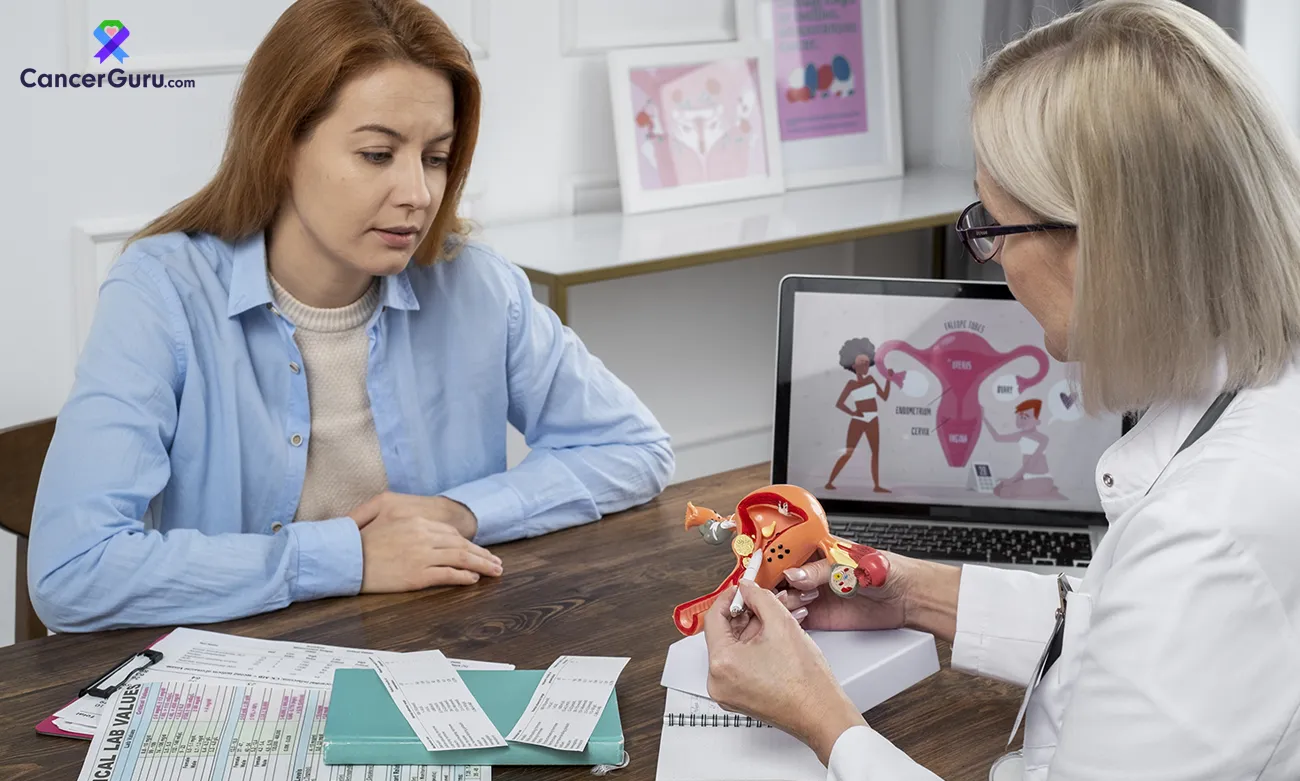
Ovarian cancer can begin quietly. Many early signs are subtle, so people may not notice them. Finding it early is not simple, and a lot of patients learn about it only after it has moved along. Some reports put early-stage diagnosis at around 15% of cases. This cancer is not limited to older women. It can occur across different ages. At first, the symptoms often seem mild. They can feel like “nothing big,” or they can be linked to some other, more common condition. In this article, we cover early symptoms that show up with ovarian cancer. We also explain why it matters when the same symptoms keep returning.
What is Ovarian Cancer?
Ovarian cancer starts in the ovaries. These are small organs that help make eggs and hormones. It can also begin with the Fallopian tubes that are nearby. In some cases, it starts in the lining close to that area. With ovarian cancer, cells that should not grow begin to grow in an out-of-control way. Tumors can form. Tumor pieces can detach. Cancer can spread through the fluid in the belly. This spread pattern is different from cancers that move through lymph nodes. The disease may involve cells on the surface, cells in the egg area, or cells in supporting tissue. As it grows, it can affect hormone balance. It can also cause pelvic pressure. When it stays only in the ovaries early, results tend to be better. Still, it often spreads within the belly. Clinicians may find it during exams, especially in people over 50. It is also more likely to be spotted sooner when there are family risk factors.
Why does Ovarian Cancer go unnoticed?
Early detection works in only a small share of cases, around 1 in 5. First, some people have no obvious symptoms. When symptoms do appear, they can be vague. They can look like other, everyday health issues. So, they may not raise concern. There is no screening test that works in a consistent and dependable way for ovarian cancer. Because of that, many cases are found after it has already moved on.
What are the Early signs of Ovarian Cancer?
Ovarian cancer may be hard to spot at the start. Many people have no symptoms at first. Some do not feel anything until the disease is farther along. Not everyone reacts the same way. Certain forms of ovarian cancer can grow more quickly. In those cases, symptoms can begin earlier. A person might notice new bloating that feels strong. There can also be belly pressure or belly pain. For many people, these symptoms do not settle by themselves. They tend to last. Over time, they can get worse. Because of this, it helps to watch for a steady pattern. Below are signs of ovarian cancer that may appear early.Ovarian cancer may be hard to spot at the start. Many people have no symptoms at first. Some do not feel anything until the disease is farther along. Not everyone reacts the same way. Certain forms of ovarian cancer can grow more quickly. In those cases, symptoms can begin earlier. A person might notice new bloating that feels strong. There can also be belly pressure or belly pain.
Sr. No. | Early Warning Signs | What it feels like/Why it Matters |
|---|---|---|
1. | Persistent Bloating | Stomach often looks swollen. It feels tight and heavy too. This does not match meals or my cycle. It goes on for more than two or three weeks. |
2. | Pelvic or Abdominal Pain | Notice pain in my belly. Sometimes it is a dull ache. Other times it feels sharp. It sits in my pelvic area, and it does not settle. |
3. | Difficulty Eating/ Feeling full quickly | Get full fast. A few bites are enough, and then my appetite drops. I have not been trying to diet. |
4. | Frequent urination | Feel like you need to urinate more often. This happens even when there is no bladder infection diagnosis. |
5. | Unexplained weight changes | Weight can change or down even if it does not alter your diet or your activity. I often see it around my stomach. |
6. | Fatigue and low energy | feel drained most days. You rest, but it does not make much difference. It feels unlike my usual tiredness. |
7. | Irregular periods or bleeding | period pattern changes. Or may spot between periods, or I may bleed after menopause. |
8. | Back pain | It can also have pain in my lower back. There were no injuries. There is no clear reason for muscle. Sometimes it may be due to ovarian growth. |
9. | Constipation or bowel changes | Bowel habits shift without warning. You may have constipation, diarrhea or cannot empty bowels all the way. |
10. | Pain during intercourse | Sex may become painful or feel off. A lot of people can brush it off. Many do not mention it to a doctor. |
These can also be symptoms of other, less serious, conditions such as irritable bowel syndrome, ovarian cysts, and polycystic ovary syndrome. If you’re experiencing these symptoms it doesn't mean you have ovarian cancer.
Risk factors for Ovarian Cancer
Some things can raise a person’s chance of ovarian cancer. These include:
Still, having one or more of these does not mean ovarian cancer will happen. It just means the person could talk with a doctor, mainly if there is ovarian cancer in the family.
Diagnosis and Tests
How doctors diagnose this condition
In the beginning, ovarian cancer can be hard to spot. Early clues are often vague. For some people, there are no symptoms at first. There is also no routine screening program for this cancer. When a clinician suspects ovarian cancer, they follow a set of checks:
- They do a pelvic exam to look for swelling or a change in size.
- They order imaging, such as MRI, CT, PET, or pelvic and transvaginal ultrasound.
- They run blood work, including tests like CA-125, and may add genetic testing.
- They may perform surgery to collect a tissue sample, so the diagnosis can be confirmed, and the stage can be set.
Stages
There are four stages of ovarian cancer, and each stage has substages. The stages include:
Stages | Spread to | 5-year Survival Rate |
|---|---|---|
Stage I | Cancer is confined to one or both ovaries. | up to 90% |
Stage II | Cancer has spread to the pelvis or uterus. | 70 – 80% |
Stage III | Cancer has spread to the abdomen or lymph nodes. | 30-50% |
Stage IV | Cancer has spread to distant organs (lungs, liver). | less than 20% |
Can Ovarian Cancer be Prevented? What You Can Do
Ovarian cancer is not always avoided. Still, you can do things that may lower your chances.
- Go to your gynecologist for routine visits. A lot of people begin with yearly visits around age 30. If you are in a higher risk group, your clinician may suggest coming in more often.
- Talk with your doctor about birth control pills. Research has shown a link between longer use and a reduced risk of ovarian cancer. In some reports, the reduction is close to 50 percent.
- Consider genetic testing if ovarian or breast cancer runs in your family. If you have relatives who have ovarian cancer or breast cancer, BRCA testing is worth discussing.
- Work toward a healthier body weight. Extra weight, including obesity, has been connected to higher risk.
- You may also want to skip talcum powder on the genital area. A few studies describe a link. Other studies do not match these findings.
- If you can and you want to, breastfeeding might help. There is some evidence that it could lower risk.
- If you carry BRCA mutations, speak with your doctor about risk-lowering options.
Conclusion
Finding ovarian cancer early can improve how people do. This is one reason it is smart to pay attention to warning signs. If you have symptoms that keep coming back, or if they linger and do not fade, reach out to a clinician as soon as you can. It can also help to understand your personal risk. A health professional can talk with you about ways to check, including genetic counseling. They may recommend genetic testing depending on your situation. While you wait, notice any new changes in your body. Focus on symptoms that are more than just a short, mild shift and worth watching closely.
Recent Posts
-

Cancer Awareness Resources: Types, Symptoms, Screening & Support
October 6, 2026 -

Nutrition During Cancer Therapy: What to Eat for Strength and Recovery
September 30, 2026 -
Leukemia vs. Lymphoma: Key Differences Explained
September 14, 2026 -

Signs and Symptoms of Childhood Cancer Parents Shouldn’t Ignore
September 8, 2026 -

Returning to Work After Cancer Treatment
September 3, 2026 -

Genetic Testing to Understand Your Family History
August 27, 2026 -

Talking to Children About a Parent’s Cancer Diagnosis
August 19, 2026 -

Managing Appetite Loss & Taste Changes During Cancer Treatment
August 14, 2026 -
Myths vs. Facts About Lung Cancer: Smokers vs. Non-Smokers
August 7, 2026