Tobacco and Cancer Awareness
May 22, 2026
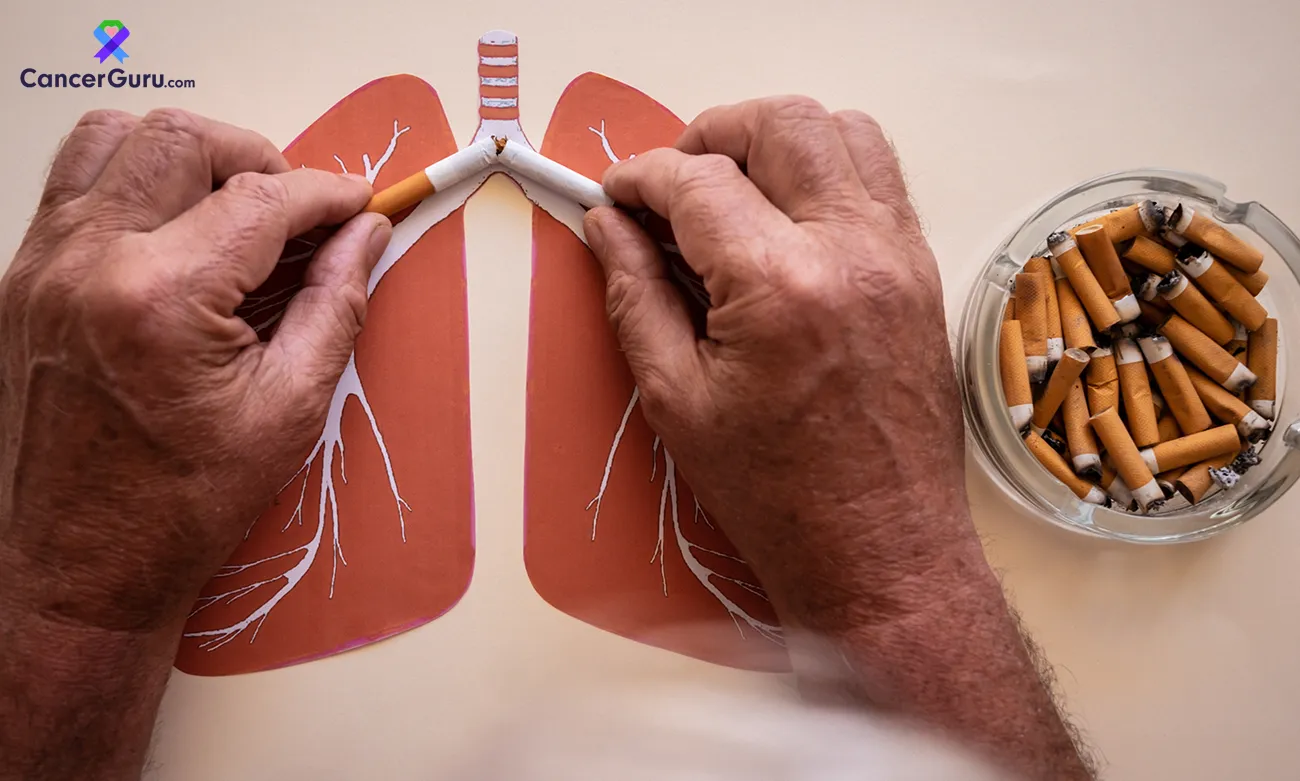
Tobacco use is the world’s leading preventable cause of cancer. Tobacco products kill more than 8 million people every year, and a large part of those deaths is because of cancer. When you know how tobacco harms your body, you have the information you need to protect yourself and those you love. This article discusses the relationship between tobacco and cancer, types of cancer related to tobacco, and what you can do to reduce your risk.
How Tobacco Causes Cancer
Tobacco smoke contains more than 7,000 chemicals. At least 70 of these are known to cause cancer. When you smoke, these chemicals go into your lungs and then into your blood, where they can travel to organs throughout your body. Benzene, formaldehyde, arsenic, and tar stick to your cells and damage their DNA.
Normal cells have clear instructions on how to grow and repair themselves. Broken DNA breaks those instructions. Over time, cells with damaged DNA grow uncontrollably, creating tumors. Your body tries to repair this damage, but the exposure is repeated, and your natural defenses will be overwhelmed.
Each cigarette, cigar, or pinch of chewing tobacco adds to the damage. "One pack-a-day smoker is exposing his body to thousands of poisonous chemicals every single day. The longer you smoke and the more you smoke, the greater your risk of cancer. This dose-response pattern suggests that the greatest risk is for heavy, chronic users.
Cancers Linked to Tobacco Use
Tobacco has the strongest link to lung cancer. Smoking accounts for nearly 85 percent of all lung cancer cases. People who smoke are 15 to 30 times more likely to get lung cancer than people who never smoke. Lung cancer is the deadliest form of cancer, and one reason for this is that doctors frequently diagnose the disease at a later stage.
Tobacco is bad for more than your lungs. Smoking and chewing tobacco cause cancer in the mouth, throat, voice box, and esophagus. This increases the danger since chemicals are in direct contact with these tissues. Tobacco causes cancer of the bladder, kidney, pancreas, liver, stomach, cervix, and colon.
Tobacco is linked even to blood cancer. Smoking increases your risk of acute myeloid leukemia. Tobacco's reach is wide and shows why no organ stays safe from the chemicals you breathe in or absorb through your mouth. This is why doctors talk about tobacco as a whole-body threat, not just a lung problem.
The Risk from Secondhand Smoke
Even if you don’t smoke, you are in real danger of tobacco. The same toxic chemicals that smokers breathe are present in secondhand smoke. When you breathe air full of other people's smoke, the chemicals get into your body and damage your cells just the same.
Secondhand smoke causes lung cancer in adults who do not smoke. This exposure kills tens of thousands of non-smokers annually. Children are particularly vulnerable because they are still developing their bodies and lungs. Kids who are exposed to smoke at home have more respiratory infections, ear problems, and asthma attacks.
There is no safe level of exposure to secondhand smoke. You can’t just open a window or go smoke somewhere else and remove the threat. Known as thirdhand smoke, smoke particles stick to surfaces, clothing, and furniture. Keeping your home and car smoke-free protects your family from these dangers.
Smokeless Tobacco and Its Dangers
Many people think there’s no risk of chewing tobacco, snuffs, and other smokeless products. This belief is false. Smokeless tobacco contains at least 28 chemicals that are known to cause cancer. Harmful substances can encounter your gums, cheeks, and tongue if you hold tobacco in your mouth for long periods of time.
Smokeless tobacco is a cause of cancer of the mouth, esophagus, and pancreas. Leukoplakia is a white patch in the mouth that users often develop and can sometimes become cancerous. The product also harms your gums, leads tooth loss, and stains your teeth.
There are concerns related to electronic cigarettes and vaping products. More research is needed on the long-term effects of vaping, but vaping liquids contain nicotine and other chemicals that have been linked to lung damage. Many young people who start by vaping go on to regularly smoke cigarettes, increasing their risk of cancer down the road. If you think any tobacco or nicotine product is safe, you are putting your health in jeopardy.
Warning Signs You Should Not Ignore
The key to saving lives is catching it early, and you need to know the warning signs of cancers related to tobacco. Lung cancer could be indicated by a cough that persists for weeks and coughs up blood or persistent chest pain. If you experience shortness of breath or recurrent lung infections, see a doctor.
Look for sores in your mouth and throat that do not heal, white or red patches, lumps, or difficulty swallowing. A hoarse voice lasting more than two weeks can be a sign of throat or voice box cancer. Blood in your urine can sometimes be a sign of bladder or kidney cancer. Many cancers often have unexplained weight loss as a symptom.
No wait for symptoms. In their early stages, many tobacco-related cancers grow silently. If you (or used to) use tobacco, talk with your doctor about screening options. CT scans help high-risk people live longer because they catch lung cancer early. Detecting cancer early generally means simpler treatment and better outcomes.
Benefits of Quitting Tobacco
The moment you stop using tobacco, your body begins to heal. Your heart rate drops in 20 minutes. Your blood carbon monoxide level will be back to normal in 12 hours. These early changes show how fast your body reacts when you get rid of the toxins.
Cancer benefits improve over the years. After 10 years of not smoking, your risk for lung cancer drops to about half that of a current smoker. You also reduce your risk of cancers in the mouth, throat, esophagus, and bladder. Your heart disease risk is equal to a nonsmoker after 15 years.
It helps you at any age to quit. If you quit smoking before the age of 40, you will reduce your risk of dying from a smoking-related disease by about 90 percent. Even those who quit after a cancer diagnosis improve their treatment outcomes and reduce their risk of a second cancer.
But quitting is a fast payoff, beyond cancer. You sleep better, your sense of taste and smell improve, and you save a lot of money each year. Your family is also better off because you eliminate their exposure to secondhand smoke in your home and car.
How to Quit Tobacco
Nicotine is very habit-forming, physically, so quitting tobacco is hard to do. Yet millions of people quit every year, and with the right plan, you can join them. Pick a quit date and remove tobacco products from your home, car, and workplace.
Many people find nicotine replacement therapy helpful for managing cravings. Patches, gum, lozenges, inhalers, and nasal sprays deliver you controlled doses of nicotine, but without the harmful chemicals in smoke. Prescription drugs also decrease cravings and withdrawal symptoms. Talk to your doctor about which is right for you, based on your needs and medical history.
Having support makes a big difference. Your chances of success increase with counseling, support groups, and free quit lines. Share your goals with friends and family for added accountability. Many people need more than one tries before they finally give up, so learn from every setback and treat it as practice rather than failure.
Know your triggers and have a plan. If stress, alcohol, or certain daily routines lead you toward tobacco, be prepared with healthy responses such as taking a walk, deep breathing, or chewing sugar-free gum. Every craving is just minutes away, and every time you resist a craving, you weaken the hold of the habit in your life.
Spreading Awareness in Your Community
When you share your knowledge, you protect more than just yourself. Start talking to your children early about the dangers of tobacco. Most smokers start before age 18. Open conversations make young people better equipped to resist peer pressure and aggressive product marketing.
Advocate for smoke-free policies in your workplace, schools, and public areas. These rules protect non-smokers and make it easier for existing users to quit. Communities with robust tobacco control efforts have lower smoking rates and fewer cancer deaths over time.
Lead by example. By living tobacco-free, you show those around you a healthier way. If you have a problem with tobacco, trying to quit is a powerful message to your family and friends. It’s through daily actions, open discussion, and constant reinforcement that awareness is raised.
Taking Control of Your Health
The decisions you make every day have a direct impact on your health status. There is a clear, proven link between tobacco and cancer, and you have the real power to break this link. Each choice you make to avoid tobacco, quit the habit, or shield others from smoke lowers your risk of cancer and improves your day-to-day life.
Begin right where you are now. What you do matters, whether you avoid tobacco, set a quit date, or help someone quit. Speak with your doctor, use your support system, and stay on hard days. A tobacco-free life adds years to your life and better health, and those you love to get those years with you.
Final Words
Tobacco is the leading cause of cancer deaths. One of the most powerful actions you can take for your long-term health is to stay tobacco-free. There is no doubt, scientifically speaking. Cigarettes, cigars, and chewing tobacco all have harmful chemicals that go into your body and increase your chance of getting cancer.
You don’t have to take on this challenge alone. Help to quit is at hand: doctors, quit lines, support groups, and proven medications. If you’ve never used tobacco, make your decision a good one and protect the air your family breathes. If you smoke right now, your next choice still counts. Your body starts healing the moment you quit.
Using what you know turns awareness into action. Share these facts with your kids. Support smoke-free places in your community. Ask people trying to quit how they are doing. Small, steady steps make homes, schools, and workplaces healthier. Every effort you make today benefits your health and the health of those around you.
FAQs
Does tobacco cause only lung cancer?
No. Tobacco is most strongly linked to lung cancer, but smoking and chewing tobacco can also cause cancers of the mouth, throat, voice box, esophagus, bladder, kidney, pancreas, liver, stomach, cervix, and colon. Smoking also increases your risk of acute myeloid leukemia. Chemicals in tobacco are not kind to any organs.
Is light or social smoking safe?
No. Even if you only smoke a few cigarettes a week, you are at a higher risk of cancer and heart disease than a non-smoker. There is no safe level of tobacco use. The risk goes up with every cigarette, so cutting down is helpful, but the best way to protect yourself is to quit altogether.
Are e-cigarettes and vaping safer than regular cigarettes?
Vaping exposes you to fewer chemicals than burning tobacco, but vaping is not safe. Vaping liquids contain nicotine and other substances linked to lung damage. Researchers continue to study the long-term effects, and young people who start with vaping often move on to regular cigarettes. The safest choice avoids all nicotine products.
Does secondhand smoke really cause cancer?
Yes. Secondhand smoke contains the same toxic chemicals that smokers breathe in, and breathing this air causes lung cancer in people who never smoke. Kids are more susceptible because their lungs are still developing. There is no safe level of exposure to secondhand smoke. Smoke-free homes and cars offer the best protection.
I have smoked for decades. Is quitting still worth the effort?
Yeah. Quitting is beneficial at any age and length of use. Within hours, your blood pressure and heart rate improve. Your risk of lung, mouth, throat, and bladder cancer drops quickly over time. Those who leave even after a cancer diagnosis improve their treatment outcomes and reduce their risk of a second cancer.
How long after quitting does my cancer risk fall?
You begin to heal within 20 minutes. 10 years Your risk for lung cancer is about half that of a smoker today after 10 years of not smoking. 15 years after quitting, your risk of heart disease is that of a non-smoker. The longer you stay away from tobacco, the more benefits you will reap.
How do I talk to my kids about this?
A combination works best. Set a quit date, remove tobacco from your surroundings, and use nicotine replacement therapy such as patches or gum. Prescription medications reduce cravings, and counseling or quitting lines raise your success rate. Telling friends and family about your goal builds support and keeps you accountable.
What early signs should send me to a doctor?
Watch for a cough lasting several weeks, coughing up blood, constant chest pain, or shortness of breath. Sores in the mouth failing to heal, white or red patches, a hoarse voice lasting more than two weeks, trouble swallowing, or blood in your urine also call for a checkup. Early detection improves your odds of successful treatment.
Recent Posts
-
Cancer Awareness Resources: Types, Symptoms, Screening & Support
October 6, 2026 -

Nutrition During Cancer Therapy: What to Eat for Strength and Recovery
September 30, 2026 -
Ovarian Cancer Symptoms Women Often Miss
September 23, 2026 -
Leukemia vs. Lymphoma: Key Differences Explained
September 14, 2026 -
Signs and Symptoms of Childhood Cancer Parents Shouldn’t Ignore
September 8, 2026 -
Returning to Work After Cancer Treatment
September 3, 2026 -

Genetic Testing to Understand Your Family History
August 27, 2026 -
Talking to Children About a Parent’s Cancer Diagnosis
August 19, 2026 -

Managing Appetite Loss & Taste Changes During Cancer Treatment
August 14, 2026